






There are hundreds of places to sell things online. Some selling sites are focused on specific niches, like video games or tech. Other marketplaces let retailers sell anything from clothing to furniture and beyond.
There are many benefits to selling through online marketplaces, but it's important to consider factors such as selling fees when deciding where to list your items.
This guide covers 20 popular online selling sites, plus tips for deciding when to sell through a marketplace and when to build your own store.
Selling items on your own store

If you're not sure where to start, selling items through an online store allows you to keep more of your profits than when selling on a marketplace. You also avoid per-listing marketplace fees and another platform’s rules.
When you run an ecommerce store, you don't pay listing fees on each sale or have to follow another website's rules.
Shopify is the easiest way to create your own store. Choose from more than 200 templates, add checkout, and use built-in tools for SSL certificates and shipping labels.
Use Shopify to sell from your website, across marketplaces like Amazon and eBay, and on social media.
Set up your store to start selling today.
Top online marketplaces and auction sites
eBay

eBay is one of the largest online marketplaces, with a large buyer base and tools for connecting it to an online store. The marketplace has over two billion listings and 135 million active buyers worldwide.
You can sell across many eBay categories, from everyday items like shoes and watches to weird stuff like popcorn-scented pillows, bottles of air, and vintage '70s giant-hand chairs. There's a steady stream of motivated customers, and it's easy to integrate eBay as an additional sales channel for your online store.
eBay fees
If you plan to sell on eBay, take the online selling site's fees into consideration. Most private sellers now enjoy zero listing fees, but eBay charges a final value fee of 3% on sales up to $15,000 per item, and 0.5% on amounts above that threshold.
In the UK, eBay removed transaction fees for private sellers in most categories in 2024, with some exclusions such as vehicles.
Bonanza

Bonanza is a smaller marketplace positioned as an eBay alternative. Semrush estimated Bonanza’s April 2026 traffic at about 642,000 visits.
Think of Bonanza as the middle ground between popular selling sites like Amazon, Etsy, and eBay. For example, you can sell the latest Nike Air Max model or a handmade copper necklace and find active buyers for each. Buyers can add products to their cart for a set price or negotiate an offer with you through the platform.
Bonanza fees
Bonanza lists a 25¢ transaction fee for non-members plus final value fees, including 11% on the first $4,000.
Ruby Lane

Ruby Lane is an online marketplace for vintage goods and antiques. Selling on Ruby Lane gives you access to highly targeted buyers for categories like collectibles, art, dolls, and jewelry.
Ruby Lane fees
It's free to set up and list your products, but there is a monthly maintenance fee of $45. In addition, Ruby Lane charges a 9.9% service fee on orders up to $2,500.
Etsy

Etsy is a selling site for handcrafted and vintage items. In 2015, it began including maker-developed manufactured goods, but only for select accounts on the marketplace. Currently, there are over 86.5 million active buyers on Etsy.
Etsy fees
You'll be charged a $0.20 listing fee for each item you sell on Etsy. Listings expire every four months. So if your item doesn't sell and you renew the listing, you'll be charged an additional $0.20.
When you make a sale, you'll be charged a transaction fee of 6.5% of the display price, plus the amount you charge for shipping and gift wrapping.
Find the most popular Etsy alternatives.
Chairish

Chairish is an online consignment shop made for high-quality home decor and furniture. Depending on the seller's plan, Chairish’s commission structure determines how much of the sale price the seller keeps.
Chairish fees
Chairish commission rates vary by seller plan and sale amount, with published rates ranging from 20% to 40% for many seller types.
Swappa

Got an old iPhone sitting around? Or a Nintendo Switch you don't use much anymore? Turn your tech into cash on Swappa, a buy-and-sell website for phones, laptops, cameras, and more.
Swappa staff review listings and use verification steps to reduce fraud. Payments are protected by PayPal.
Swappa fees
There are no fees to create a listing, but you can choose to have your items featured for $5. When you make a sale, you pay a 3% fee, along with the buyer.
Poshmark

Poshmark is a social commerce marketplace for clothing, accessories, and lifestyle goods. Sellers can reach Poshmark’s user community and share listings through social features.
Poshmark fees
As stated in its FAQ, sales under $15 accrue a flat commission of $2.95. For sales over $15 Poshmark's commission is 20%.
Amazon

As global ecommerce sales continue to grow, Amazon is the largest online selling site. Independent sellers account for more than 60% of sales in Amazon’s store, and more than 75,000 surpassed $1 million in sales in 2025.
Amazon fees
The cost to sell on Amazon depends on your plan, product category, fulfillment strategy, and other variables. At minimum, you'll pay $39.99 per month for a Professional Seller plan.
Websites for local sales
If you plan to sell in your community, here are the top online sites and apps for local selling:
Facebook Marketplace

Facebook Marketplace from Meta is an online selling site where individual people can discover, buy, and sell items on Facebook.
Marketplace has a large user base and high listing activity. Meta said in 2026 that more than 3.5 million listings are posted daily in the US and Canada. It's free to list and Meta takes no fees, but there are guidelines you need to follow to sell on the platform.
Meta has also partnered with platforms like Shopify to let merchants list their items and find new customers for their business.
Facebook Marketplace fees
Selling locally with in-person pickup is free on Facebook Marketplace.
Craigslist

Craigslist is one of the older classified-ad sites for local selling. It's free and designed for person-to-person sales.
Craigslist recommends caution, public meetups, and scam-avoidance practices for local transactions.
Nextdoor

Nextdoor focuses on neighborhood-based posts, including local buying, selling, and giveaways.
Nextdoor also offers a free forum to sell your items online. It's similar to Facebook Marketplace: there are no listing fees and you'll have to meet buyers in person. Nextdoor requires an account, but buyers and sellers still assume responsibility for transactions.
VarageSale
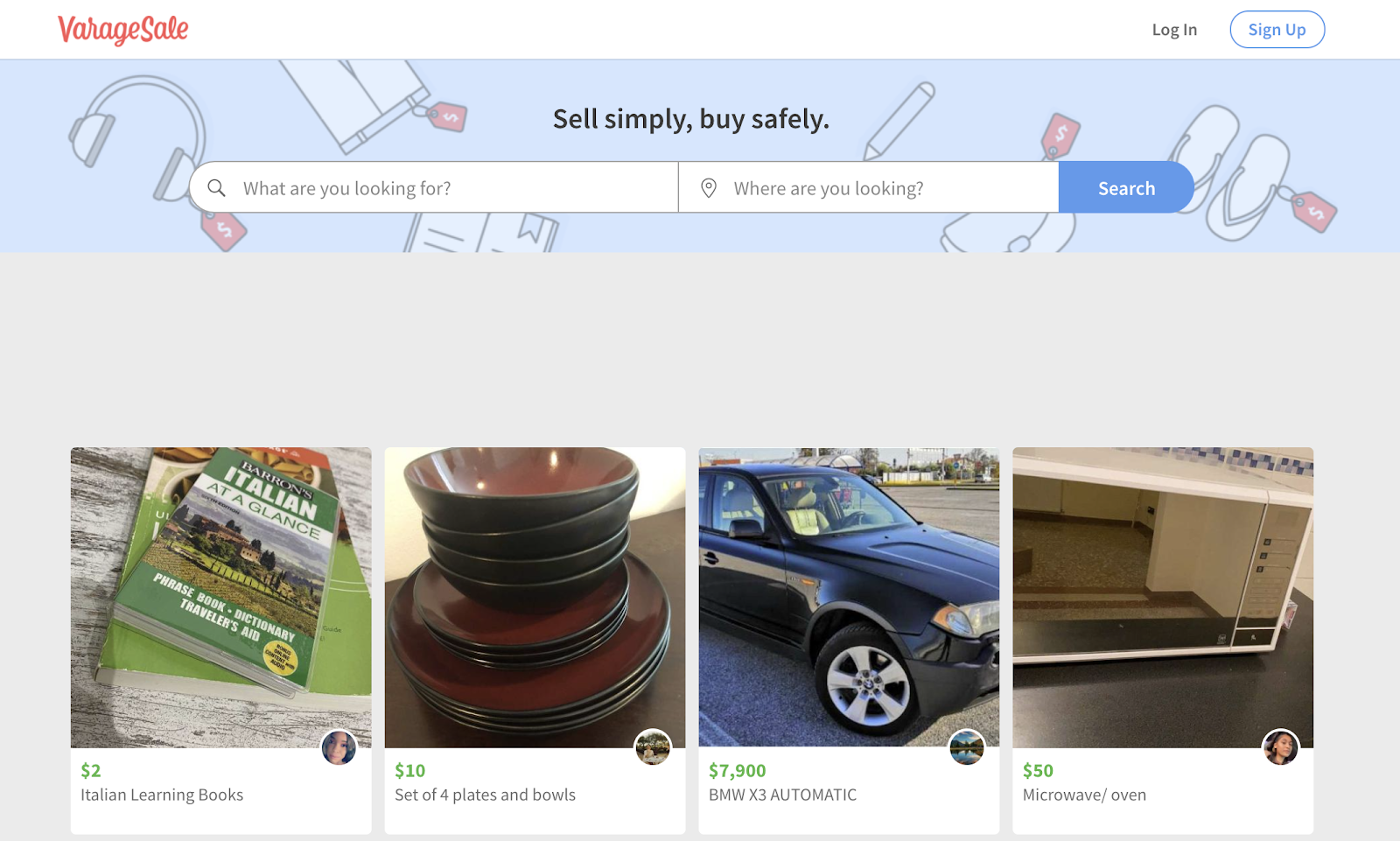
VarageSale is a virtual garage sale buy and sell app. It was started in Canada by an ex-elementary school teacher fed up with scams and fake listings on other classified sites. VarageSale uses real-name profiles and manual review before members can buy or sell.
Offerup

Offerup allows users to browse electronics, clothing, and even automobiles based on ZIP code. Interested buyers can contact sellers through the app to negotiate price and set up a location to meet.
OfferUp includes safety features such as TruYou identity verification and Community MeetUp Spots.
Best global online selling sites
Here are the best sites to sell online around the world:
AliExpress

Founded in 2010, AliExpress is Alibaba's cross-border ecommerce marketplace. Users of the platform can sell to individual people or businesses, whether they are manufacturing products or adding an AliExpress dropshipping model to their online store.
You pay a fixed commission as a percentage of the total sales price. This rate varies by category, but is generally between 5% and 8%.
Taobao

Taobao is an online selling site founded in 2003 that has grown to become the largest online marketplace in the world by gross merchandise value.
OTTO

Otto is based in Germany and has a focus on fashion and lifestyle products. It grew from a post-war mail-order company selling shoes to a business with 12.6 million active customers.
Rakuten

Rakuten is a large marketplace based out of Japan that provides ecommerce, banking, communications services, and more. Similar to marketplaces like Amazon, you can sell in endless product categories, including clothing, books, sports, subscription boxes, and more.
Mercado Libre

Mercado Libre is the largest online commerce network in Latin America, based on unique visitors and processed orders. Its marketplace operates in 18 countries and lets sellers list products across country-specific categories covering a wide range of product types.
Flipkart

Flipkart started as an online bookstore in 2007 and has become the largest online selling site in India. Retailers can sell anything on Flipkart, including consumer electronics, fashion, home essentials, groceries, and lifestyle products.
Read more
- Sell Photos Online- 18 Websites for Selling Your Photography
- How To Source Products To Sell Online
- 25+ Ideas for Online Businesses To Start Now (2024)
- The 13 Best Dropshipping Suppliers in 2024
- The 9 Best Dropshipping Websites for Your Online Store
- What is Shopify and How Does it Work?
- What Is Affiliate Marketing and How to Get Started
- 130+ Dropshipping Products To Sell for Profit
- 3 Live Workshops to Help You Plan for a Breakthrough Black Friday Cyber Monday
- Psychological Pricing- What Your Prices Really Say to Customers
Selling sites FAQ
How can I start selling online?
- Use an ecommerce platform to create your own online store.
- Become an individual seller on existing online selling platforms like Amazon, eBay, or Etsy.
- Sell on social media platforms like Facebook and Instagram.
- Start a dropshipping business.
- Sell used goods through a resale app like VarageSale.
What are the best websites for selling stuff online?
- Your own store
- Amazon
- eBay
- Etsy
- Facebook Marketplace
- Rakuten
- Poshmark
Where can I sell my stuff online for free?
- Facebook Marketplace
- Nextdoor
- VarageSale
What is the best site to sell stuff locally?
- Facebook Marketplace
- Craigslist
- Nextdoor
- VarageSale
- OfferUp
- Poshmark
- eBay
What are the best sites to sell products internationally?
For international selling, consider these platforms:
- Amazon Global: Reach customers across North America, Europe, Asia, and more
- eBay International: Sell in 190+ markets with built-in shipping options
- Etsy: Strong international buyer base for handmade goods
- Your Own Store: Use Shopify Markets to sell in multiple currencies and languages
When selling internationally, factor in currency conversion, shipping costs, and local regulations. Building a strong brand helps you compete globally.
Should I sell things on a marketplace or from my own store?
The short answer? Use both. While marketplaces offer immediate access to buyers, your own online store gives you control over branding and customer relationships.
Advantages of selling on marketplaces
- Built-in traffic: Access millions of potential customers from day one
- Trust and credibility: Buyers trust established platforms
- Lower setup costs: Start selling quickly with minimal upfront investment
Advantages of your own online store
- Brand control: Complete control over your brand identity and customer experience
- Customer data: Own your customer relationships and data
- Higher profit margins: No marketplace fees eating into every sale
- Flexibility: Customize features, pricing, and promotions without restrictions
Consider starting with marketplaces to validate your products and generate initial sales, while simultaneously building your own store for long-term growth.


