Thousands of years ago, a hunter drew a bison on a cave wall with some charcoal to tell his community about nearby dining options.
From this point on, our survival became dependent on telling clear, compelling stories—passing down critical information about shelter, food, and hunting.
By the time Shakespeare appeared onstage, books were being produced en masse by Gutenberg’s printing press, which meant stories were now fixed and could be shared verbatim. This allowed religions, governments, and societies to establish and scale a tight narrative.
The industrial age led to radio and cinema, letting stories be broadcast simultaneously around the world. In the mid-1900s, television gave everyone a screen, which became the domain of privileged brands and corporations wealthy enough to buy ad space to tell their stories to the masses.
Then, around 25 years ago, the evolution of the internet, followed closely by the proliferation and exponential growth of social media networks, unleashed a power that let everyone tell, share, and profit from stories.
Storytelling to stand out in ecommerce
If your brand is in a saturated market (i.e. anything the requires selling online), there are some very creative ways to stand out in the crowd through smart, compelling storytelling.
To figure out those creative ways, Bertie Ocampo says to start by thinking about a story you love—a documentary, a podcast episode, or a novel.
What is it about that story that makes it stay with you? Chances are it moved you to feel something. If you can move your audiences to feel something it’s easier to build trust and an initial connection, laying the foundation for turning them into a customer.”
Bertie Ocampo, APAC Integrated Marketing Lead, Shopify
A brand story contains many of the same elements that draw you into your favourite book or film. And it’s a story that serves a similar purpose.
Bertie says, like a movie or your favourite novel, your story has characters, which are your customers; a conflict, which is your customer pain point; a rising action, which is your journey to solve that problem; and a climax, which is the launch of your product.
“Your story then becomes the structure upon which your customers write their own,” she says. “Remember: people will forget what you said, people will forget what you did, but people will never forget how you made them feel.”
Learn more: Gymshark and Flow Share Their Secrets for Brand Discoverability
Staying strong while scaling
There comes a point in every organisation’s life where scale confronts operational reality. Bertie says to ask yourself how you keep doing what you were doing in a bigger way, such that it doesn’t sacrifice the quality and reliability of how you got there in the first place.
Scaling isn’t just about getting bigger,” Bertie says, “it’s about getting better. With the digital tools available it can be quite easy to scale quickly. It also makes it easy to scale poorly.”
Speed of growth must be balanced with precision or the quality of your brand will suffer, and quality is what makes you special and what makes it worth scaling in the first place.
Remember these key points when scaling:
Keep your customer at the heart of the organisation’s decisions.
Inform all strategy decisions with real data.
Ensure your team culture mirrors your brand culture.
Always continue to learn and reiterate your brand story.
Learn more: From One-Time Buy to Brand Loyalist: 5 Ways to Build Lasting Customer Relationships
Who is getting it right?
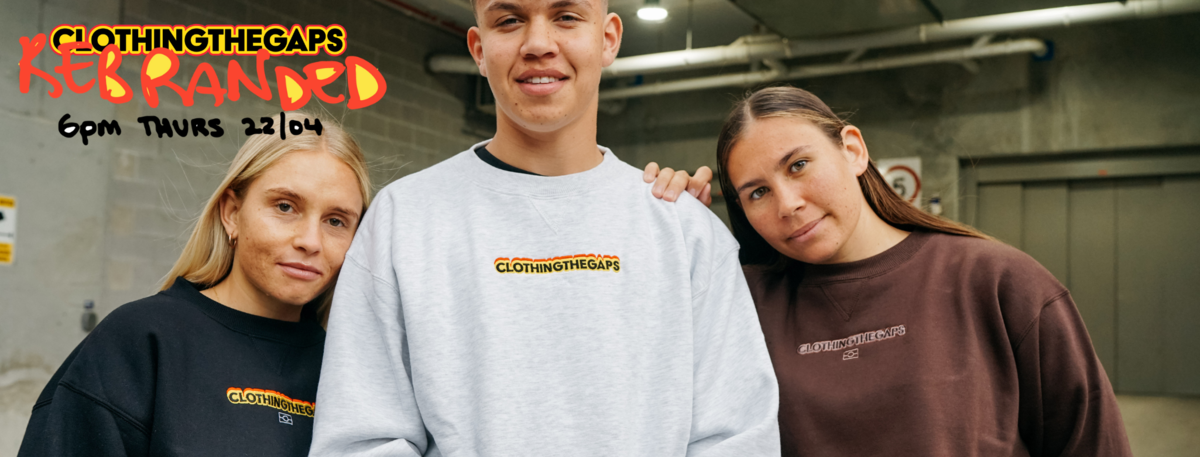
Brands with purpose are the ones who thrive and have their stories spread furthest.
Laura Thompson is a Gunditjmara woman and co-founder and managing director of Clothing The Gaps, an Aboriginal-owned and -led social enterprise that connects customers and creates social change through the power of storytelling. “We unite people through fashion and a cause, and we create merch with a meaning—conversation starters that create social change within the community,” she says.
Clothing the Gaps lives by the term “Wominjeka,” which is a Woi-wurrung word for “welcome” or “come with purpose.”
Sarah Sheridan, co-founder and director of operations at Clothing the Gaps, says, as a social enterprise, Clothing the Gaps reinvests its profits back into its foundation.
Our foundation exists to add years to Aboriginal people’s lives, so every t-shirt, scarf, beanie, and hat that we move all goes into our purpose”
“We are an Ethical Clothing Australia–accredited business. We are the first Aboriginal business to have that accreditation. We produce as much as we can locally in Melbourne, and we ensure every single piece of product that’s made in Australia has that Ethical Clothing accreditation, which means everyone is looked after in the process.”
Recently, Clothing the Gaps faced some legal hurdles, over both its old name, Clothing the Gap, and its use of the Indigenous flag.
“When we first registered, GAP let us know they intended to oppose it, and then it wasn’t long after that we got our cease and desist from WAM clothing about the use of the Aboriginal flag and the whole copyright issue there,” Sarah says.
“We chose to fight publicly and put our attention into the Free the Flag campaign. We trusted the experts around the trademark issue. It was a dark cloud that hung over us for two years. We didn't know what we were going to be called. We trusted our community would come on board with us on where we had to go with that.”
Laura says Shopify has allowed Clothing the Gaps to keep on running during hard times.
We love Shopify. Our business is an online platform and we do have a shop, but the majority of the sales comes through our online platform,” she says. “It has allowed us to survive during COVID and difficult times. It definitely helped us.”
“As we’ve grown and shifted, we’ve changed the way we do business,” Sarah says. “Shopify has enabled us to do that well. It’s never held us back on any decision we’ve wanted to make.”
Learn more: The Best Brand Storytelling Examples from Fashion Ecommerce Websites
Takeaway tips
Use your brand’s unique story to stand out from the crowd.
When scaling, always keep your customer at the heart of the organisation’s decisions.
Speed of growth must be balanced with precision.
If your brand has a social cause and purpose, ensure your customers understand it.
Always continue to learn and reiterate your brand story.
About The Rebound Season 2
Episode 2 of The Rebound Season 2 aired in Australia this Saturday, July 10, at 12:30 p.m., on Channel Nine. New episodes are released every week.
Each new episode of The Rebound will cover a different theme to address the most pressing opportunities and challenges facing entrepreneurs today.
The themes, in chronological order, are: Skills, Design, Storytelling, Pricing, Culture, Growth, Future of Work, and Crypto.
For more information about The Rebound, visit the website, where you can catch all the episodes from season 1.
Read more
- 6 Best Open-Source Ecommerce Platforms for 2023
- 11 Ecommerce Checkout Best Practices: Improve the Checkout Experience and Increase Conversions
- Six Must-Have Technologies to Build the Best Ecommerce Tech Stack
- Rebound Growth Hacks: How Cryptocurrency Could Impact your Business
- Rebound Growth Hacks: Turbocharge Your Ecommerce Business With These Skills
- Rebound Growth Hacks: Designing an Authentic Experience For Your Customers
Storytelling Ecommerce FAQ
What is storytelling in ecommerce?
Storytelling in ecommerce means presenting a brand and its products through narrative elements—characters, conflict, and resolution—instead of plain feature lists or price points. Customers become the hero of the story, their pain point acts as the obstacle, and the product serves as the resolution that moves them from problem to solution. This framing builds an emotional connection that makes a brand memorable in a crowded market.
Why does storytelling increase conversions for online stores?
Storytelling increases conversions because shoppers retain and act on information delivered through narrative far better than plain facts or specs. Research from Harvard Business School shows people remember facts if they are in a story 22x more than telling facts alone. That improved recall helps a brand stay top of mind when a shopper is ready to buy, rather than being forgotten among competitors offering similar products at similar prices.
Where can I find ideas for my brand's story?
Look at the reason the business started, the problem it was built to solve, and how customers describe the product in reviews or support messages. Founder origin moments, unexpected customer use cases, and the obstacles overcome while building the product all make strong material. Testing a story idea from the buyer's point of view, rather than the brand's, helps confirm whether it will actually resonate before it's used across a site or campaign.
Do I need a big budget to tell a compelling brand story?
No—authenticity matters more than production value when it comes to brand storytelling. Authenticity should be your primary goal in every piece of storytelling you share, even more so than polish and glamor. A simple, honest account of why a product exists or how a customer uses it can build more trust than a highly polished but generic campaign, especially for smaller sellers without large marketing budgets.
How can I measure whether my brand storytelling is working?
Storytelling can be measured by tracking engagement on story-driven content alongside conversion and loyalty data. Watching video or page completion rates, conversion lifts on the pages where a story appears, and repeat purchase rates over time shows whether a narrative is actually moving customers toward a sale and keeping them coming back, rather than just generating views.