






Every online store wants to increase traffic and conversions. But even after you’ve put together a basic strategy it can still be challenging to decide which marketing tactics you should try.
That’s why we put together an overview of effective marketing tactics and ecommerce tools, along with ideas to help you implement each approach. The ideas run the gamut from straightforward acquisition to generating more repeat purchases from your already existing customer base.
Try to implement one of these ideas every day for the next few weeks. On the last day of your sprint, take stock and figure out which tactics worked best for driving new sales.
What are tactics in marketing?
Marketing tactics are the specific actions a company takes to implement its marketing strategy. For example, a common marketing tactic is running ads in newspapers or on TV.
Companies can use many different marketing tactics, and the best tactic for a particular company depends on its products, target market, and marketing budget. A company’s marketing strategy and tactics must work together to achieve the desired results.
Marketing strategies vs. tactics
When it comes to marketing, there is a lot of confusion about tactics and how they differ from strategies.
- Marketing strategy refers to a company’s overarching plan to achieve its marketing objectives. A good marketing strategy takes into account the company’s strengths and weaknesses, as well as its target market and the competition. It also highlights the company’s marketing goals.
- A marketing tactic is a specific action taken to execute a marketing strategy. For example, if a company’s marketing strategy is to increase brand awareness, a tactic might be to run Instagram ads.
A marketing strategy is the overarching plan that a company uses to achieve its marketing objectives. The strategy considers the company’s strengths, weaknesses, and target market. Based on this information, the company creates a plan of action to reach its desired results.
Tactics should never be implemented without first considering the overall strategy. Doing so would be like shooting an arrow without taking aim—you may hit the target by chance, but it’s more likely that you’ll miss entirely.
Similarly, a company that implements tactics without first developing a sound strategy is likely to see little success. Without a clear direction, it’s easy to get lost and waste time and resources on activities that don’t yield real results.
To be successful, both marketing strategy and tactics must work together. The strategy provides the overall direction, while the tactics are the specific actions taken to reach the desired goal.
The 32 best marketing tactics to increase online sales
- Upsell your products
- Integrate Instagram
- Reduce abandoned carts
- Launch a Facebook store
- Capture more email subscribers
- Improve your email campaigns
- Send wishlist reminder emails
- Make it easy for customers to get what they want
- Engage store visitors with live chat
- Anticipate future sales
- Start a content marketing program
- Embrace personalization
- Leverage user-generated content
- Think local
- Optimize your product pages
- Optimize for mobile
- Reward your loyal customers
- Run pay-per-click ads
- Get sponsorships
- Make influencer partnerships
- Start TikTok marketing
- Get customer testimonials
- Go to events
- Start livestreaming
- Run guerrilla marketing campaigns
- Get press coverage
- Start SEO marketing
- Repurpose your content
- Sell on marketplaces
- Run webinars
- Get referrals
- Promote Instagram giveaways
1. Upsell your products
Most of us have heard some variation of the famous “Would you like to supersize your order?” It’s an example of upselling, or the approach of selling a slightly more premium product than the one the customer was originally considering.
For many businesses, upselling can be more effective than acquiring a net new customer. Sometimes your customers don’t know that a premium product is available, or they may simply need more evidence to understand how an upgrade (or package) is a better fit for their needs.
For example, is one of your product models made of slightly better leather? Or does one carry a special component that’s handmade? Make sure to emphasize the difference and ask, in the right places, if the customer might want to upgrade.
There are two main considerations when using upselling to increase sales:
- Make sure your upsells are related to the original product.
- Be sensitive to the anticipated price range of your customers.
Your product has to fit the customer’s original needs, and they may not be enthusiastic about a higher price point once they have an anchor price in mind. An anchor price is often the first number a customer sees, and it’s the number against which they compare other price points. The new product must be a discernibly better fit than the original for it to be worth the additional cost.
Anyone who’s ever purchased a computer is familiar with the screen below. Once you’ve selected a particular model, companies will usually highlight upgrades for performance (upselling) or additional accessories (cross-selling) for you to consider.

2. Integrate Instagram
With over 500 million daily active users, Instagram is one of the fastest growing social apps around, connecting consumers, influencers, and brands.
If you take compelling photos, use hashtags strategically, and post at the right times then you’re well on your way to building a large Instagram following of people who are interested in your products. The key to mastering your organic Instagram presence is engagement with your followers.
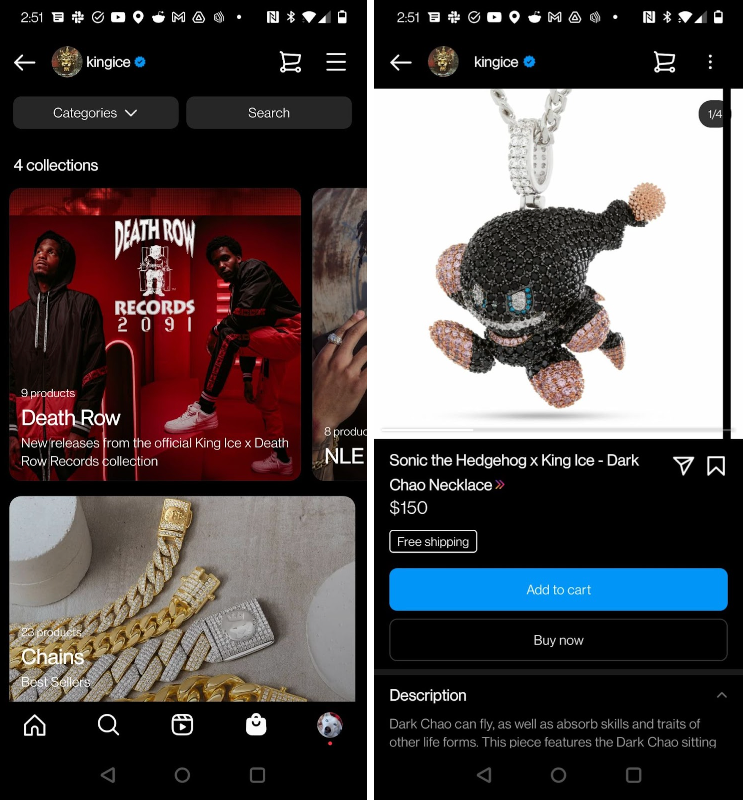
What are some ways to engage with your audience on Instagram? You may try running contests or going behind the scenes to showcase your product development process. You can also pay to play on Instagram. For ecommerce marketing, adding products to your Instagram posts and Stories gives your followers a direct path to purchase, which is key for increasing your online sales.
Check out this example from King Ice to see shopping on Instagram in action:
3. Reduce abandoned carts
Harsh truth: You lose money every time a visitor abandons their cart without purchasing.
This phenomenon is well-studied. Visitors add items to their carts, but abandon their carts during the checkout process. Statista reports the shopping cart abandonment rate for the second quarter of 2022 was 85% among US ecommerce shoppers.
It’s worth addressing as many hesitations as possible because some shoppers who abandoned their carts could have been reminded to complete their purchase. Perhaps they could have been persuaded with a discount or free shipping, for example.
One simple and effective ecommerce marketing idea for reducing the frequency of abandoned carts is an email recovery campaign, which can convince your visitors to make a return visit and complete their original purchase.
The folks at Rudy’s barbershop use quirky subject lines in emails to try to get customers to return to their carts.
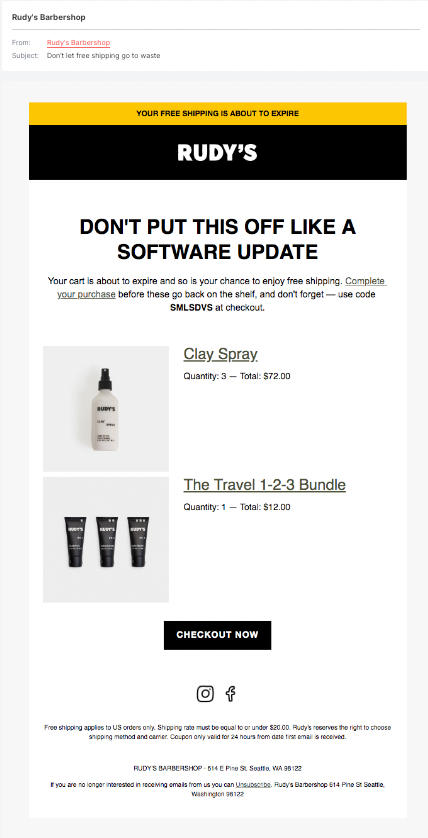
Craft an email that entices your visitors to return to their carts by reminding them what they considered purchasing in the first place, and why.
4. Launch a Facebook store
Although Facebook has undergone a number of changes, it remains a viable social media marketing platform for ecommerce brands.
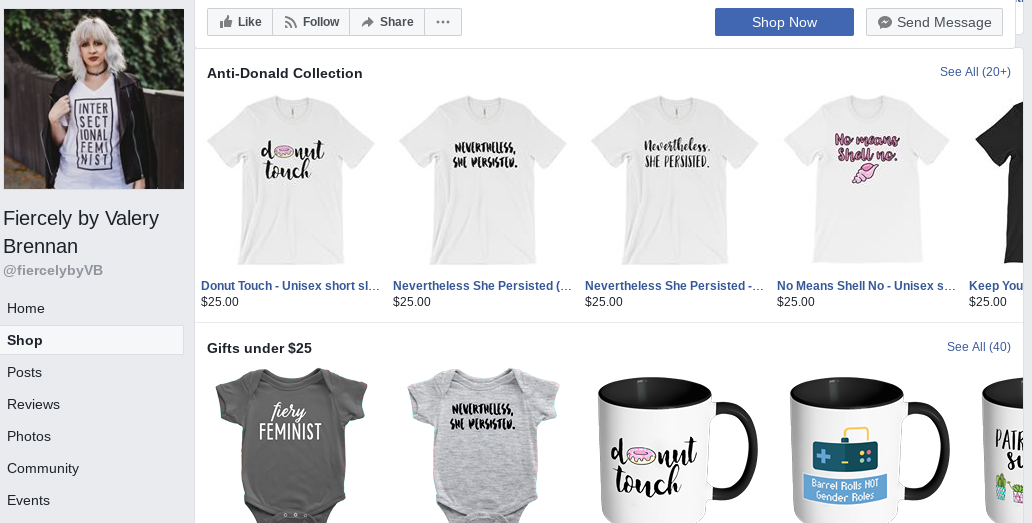
It’s fairly straightforward to start making sales through your Facebook store. Better yet, your Facebook store can integrate directly with your Shopify store so you don’t have to keep a separate inventory.
For inspiration, have a look at the Facebook store for Fiercely by Valery Brennan.
5. Capture more email subscribers
Dollar for dollar, email marketing is one of the most effective channels at your disposal for making sales and generating repeat customers.
We have too many tweets and Facebook posts to keep up with, and email can offer a more intimate interaction. People are still more protective of messages sent to their personal inboxes versus their social feeds. Plus, email gives you the space to say things that can’t fit into a social media post.
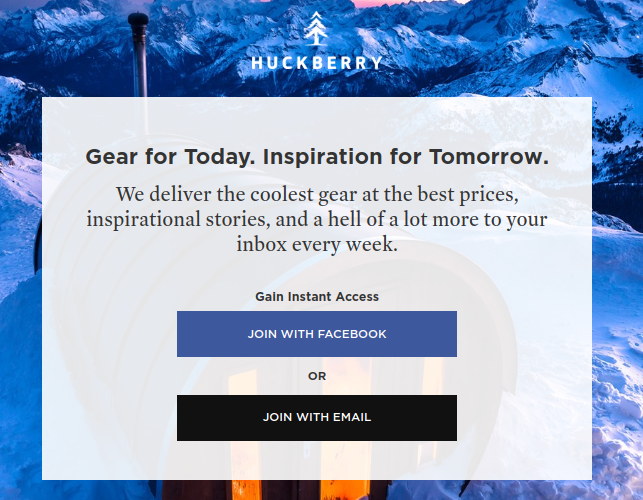
To get started with email marketing, actively promote your newsletter, blog, and any other email capture efforts to get as many subscribers as you can. Take a look at Huckberry, which makes signing up for its email list the central focus when you first visit its site.
6. Improve your email campaigns
It’s not enough to simply capture a bunch of email addresses. You then need to send regular, valuable emails for the channel to be an effective ecommerce marketing activity.
There are many occasions that are perfect for sending emails that your subscribers will actually appreciate:
- Send a welcome email as soon as a customer makes a purchase.
- Provide exclusive promo codes and free gifts.
- Send regular newsletters to alert subscribers of new discount offers, product tips, and, when appropriate, company news.
- Share relevant content to help customers get the most out of their recently purchased items.
- Run a BOGO campaign in time for the holidays to promote self-gifting during the season, too.
- Thank your highest-value customers. Send a personal note expressing your appreciation for their business.
- Solicit feedback. If someone visits your site but doesn’t make a purchase, ask about their experience and how you can improve it.
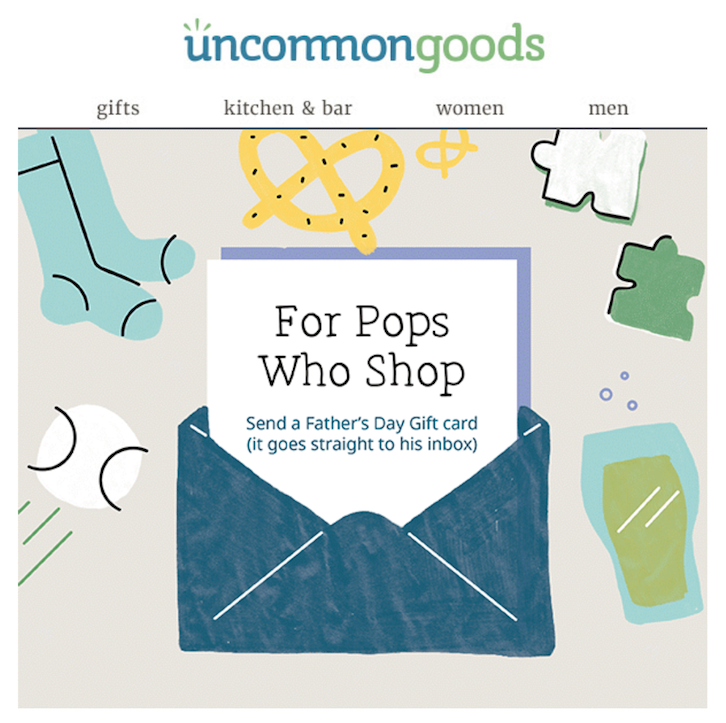
Take a look at this simple email from Uncommon Goods. For Father’s Day, it sent a last-minute email to remind subscribers of the occasion, and to provide a service for the procrastinators on their list. The subject read, “The Gift that Will Save Father’s Day.”
7. Send wishlist reminder emails
One final type of email to add to your list of ecommerce marketing ideas: the wishlist reminder email. The wishlist reminder email is closely related to the abandoned cart email. Both are designed to convince shoppers to take the final step in purchasing the products they have shown intent to buy.
Has it been a while since someone checked in on their wishlist? Have an item on sale that’s been put on many wishlists? Is it selling out? Send out an email to let your customers know.
It may just be the trigger they need to purchase the item. ModCloth alerts shoppers when products are nearly out of stock. This motivates shoppers and helps minimize regret—no one wants to accidentally miss out on a product they’ve been eyeing.
8. Make it easy for your customers to get what they want
If your store is poorly designed, then you’re losing customers. But what exactly does a poorly designed store look like?
Besides appearing untrustworthy, the store could be suffering from some combination of the following: lacking a clear value proposition, hard-to-read font, or confusing navigation.
Even when you’ve improved the dimensions above, you could still make a few design mistakes. Are you properly segmenting your products or putting too many products on a single page? Have you figured out the right balance between text and visuals? These are just a few of the many things that you should consider. If your theme isn’t converting well, consider some of the other great themes available on Shopify.
There are many examples of beautiful ecommerce websites, but consider DODOcase. Take a look especially at how clearly products are segmented.

9. Engage store visitors with live chat
Other high-impact ways exist to engage with site visitors and customers outside of email. For example, you could use live chat to engage with shoppers on your site.
Many live chat tools let you target browsers on certain pages, after they’ve been on your site for a certain length of time or even after they’ve arrived on your site through an email newsletter. Live chat also enables you to have direct conversations with your customers so you can answer and address their concerns right while they’re planning to buy.
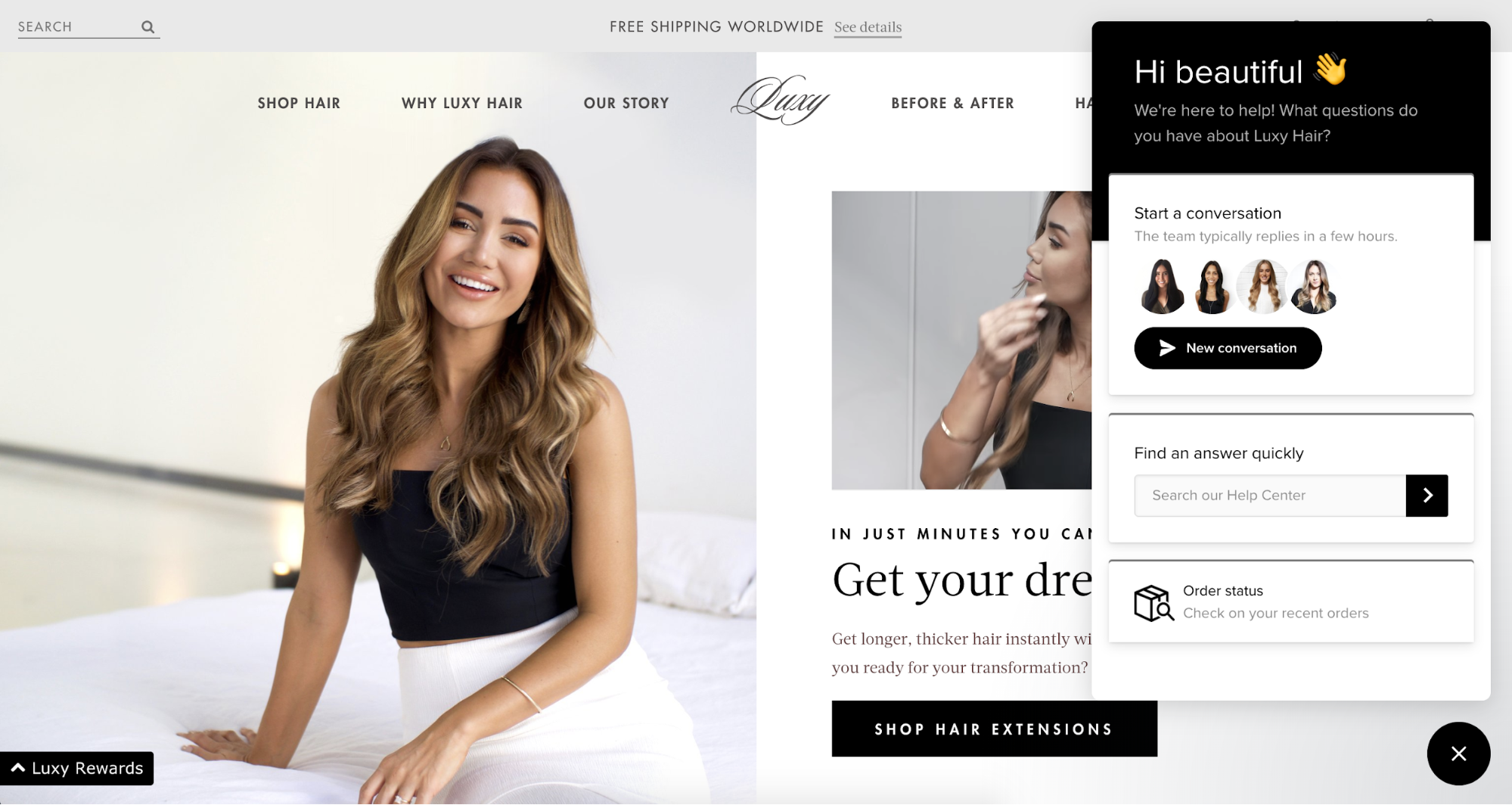
Luxy Hair uses live chat to engage prospects and inform current customers of their order status without contacting its support team over email.
10. Anticipate future sales
If you have the ability to expand your product line, then you should evaluate market demand and see if it’s worth the cost. You can do that through various approaches: keyword research, geographic validation, social media trends, etc. One more creative way to test out your market? Pre-sell items to see how many people place orders.
If you’re trying to decide which of three to-be-released products to sell, for example, create pages for all of them, making sure to use quality product photography and compelling copy. Then list them as “out of stock” and see which product gets the most attention regarding back-in-stock notification requests. That’s the one to sell.
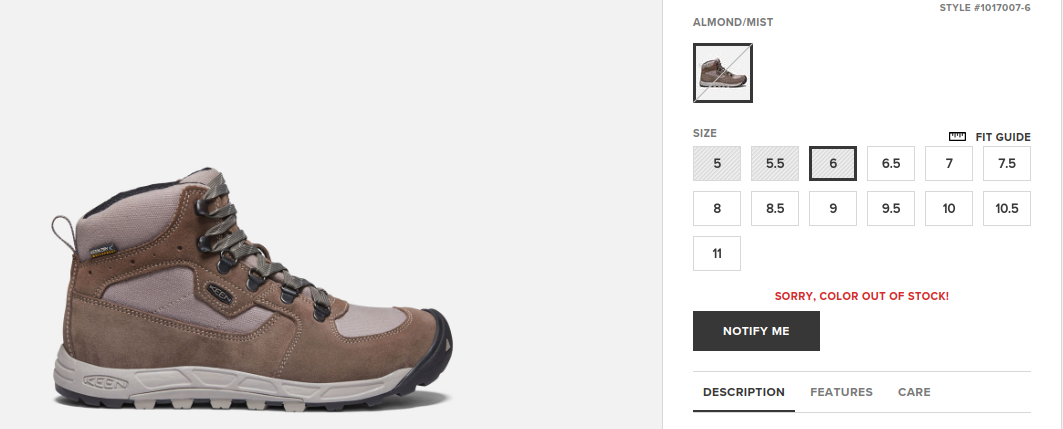
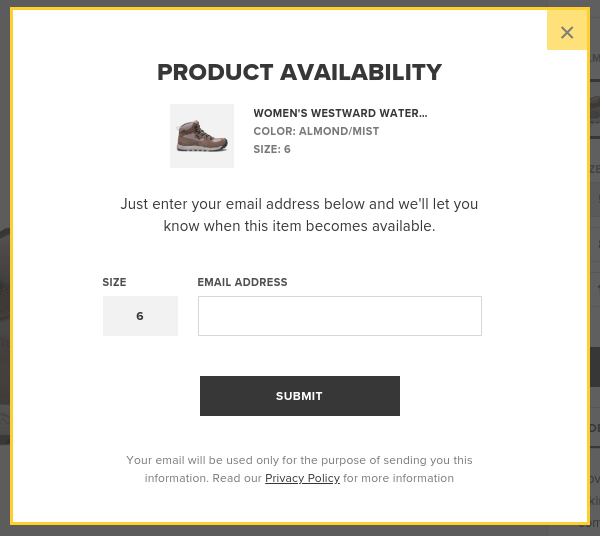
In footwear and apparel especially, there are times when certain size or color variants are temporarily out of stock. KEEN, which sells hiking shoes, allows shoppers to receive an email when a product is available again.
11. Start a content marketing program
Every ecommerce store should consider blogging regularly to connect with customers and to rank better in search engines. Consider actively featuring your blog on your online store if you're already creating content.
Don’t forget, there are more ways to take advantage of content marketing than simply blogging:
- Start a podcast to feature your expertise or build a stronger community.
- Guest post on other websites and blogs to build awareness and generate backlinks, which also help with SEO.
- Create long-form content and guides to help customers use your products more effectively.
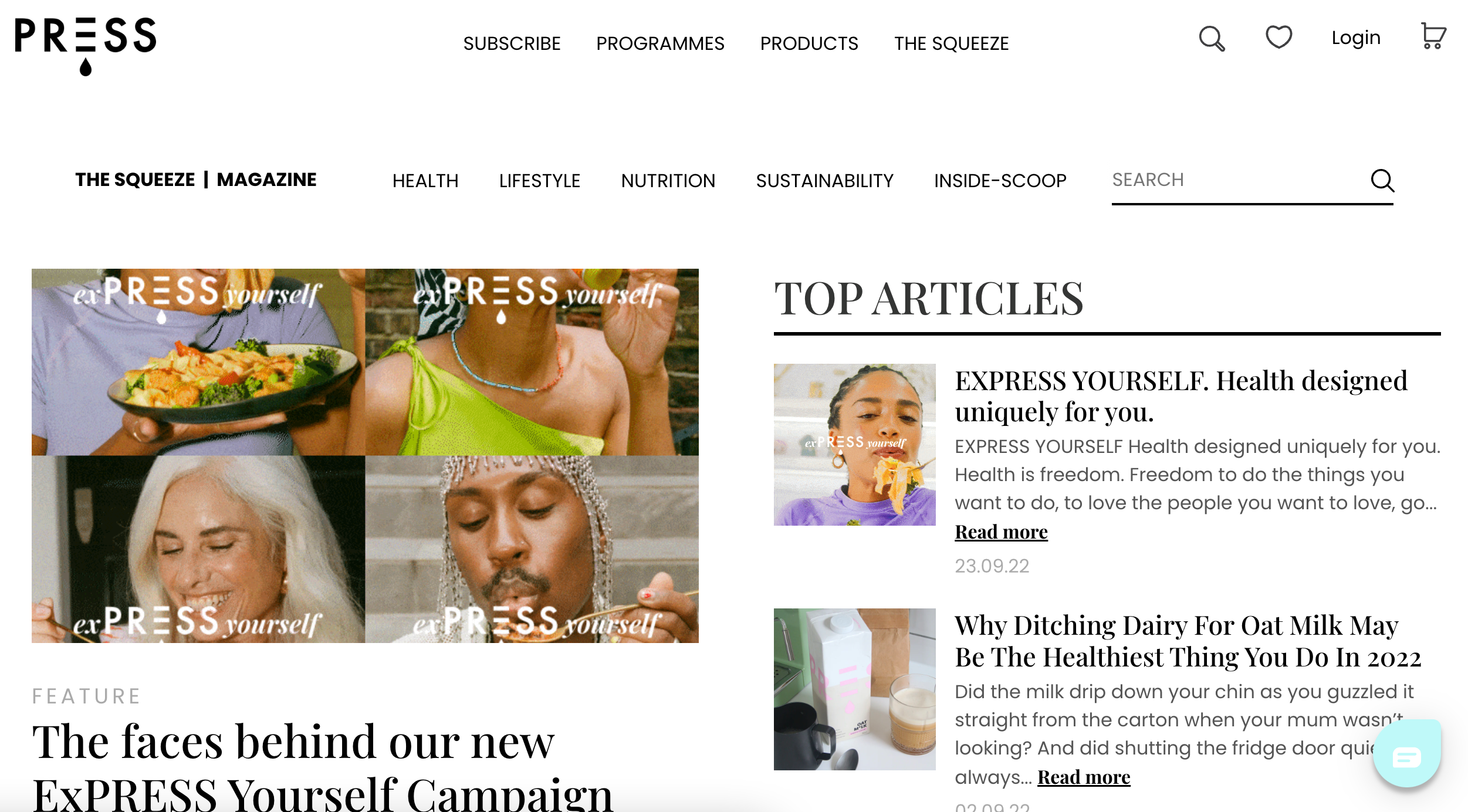
Pressdelivers plant-based goodies like cold-pressed juices and kombucha. Press's blog, The Squeeze, offers tips for maintaining a healthy lifestyle. The topics of blog posts range from switching to a plant-based diet to healthy recipes to suggestions for improving digestion while traveling.
12. Embrace personalization
Personalization is another effective marketing tactic to drive online sales. Using behavioral data, personalized experiences are served to the visitor, according to their past actions and preferences.
According to BCG, personalization can lift sales as much as 10%, but the opportunity is greater than that. Only 15% of companies are using the technology to its fullest extent.
You can also account for location in personalization to create an experience catered to where your customers are in the world. Someone in southern California may be looking for bathing suits in October, while your Maine customers probably need coats, for example.
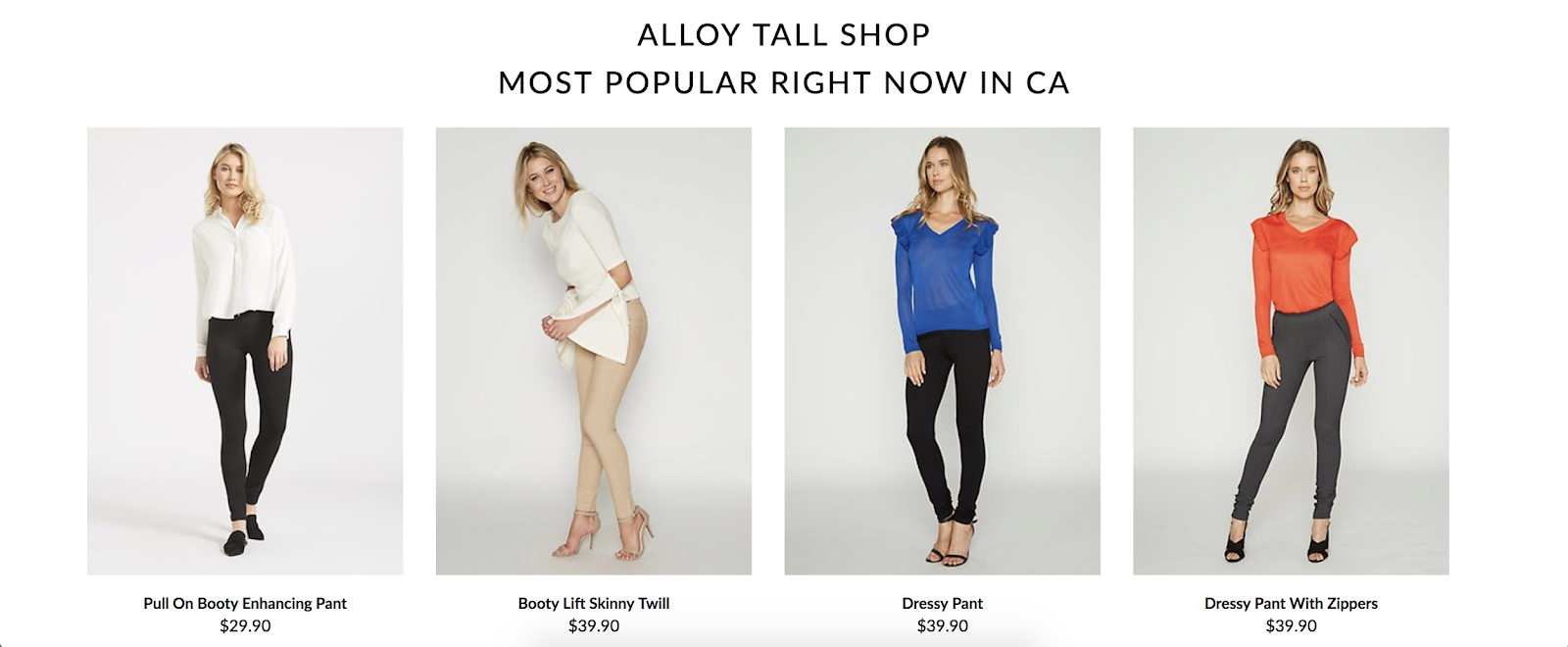
Alloy Apparel shows a “what’s popular” carousel of products for online shoppers, but personalizes it with trending items local to the visitor.
13. Leverage user-generated content
User-generated content (UGC) is a great way to generate social proof. When prospective customers see that people just like them are regularly purchasing your products, they’ll feel more confident in doing the same.
According to a survey done by Brightlocal, 77% of consumers trust consumer reviews as much as personal recommendations from friends and family.
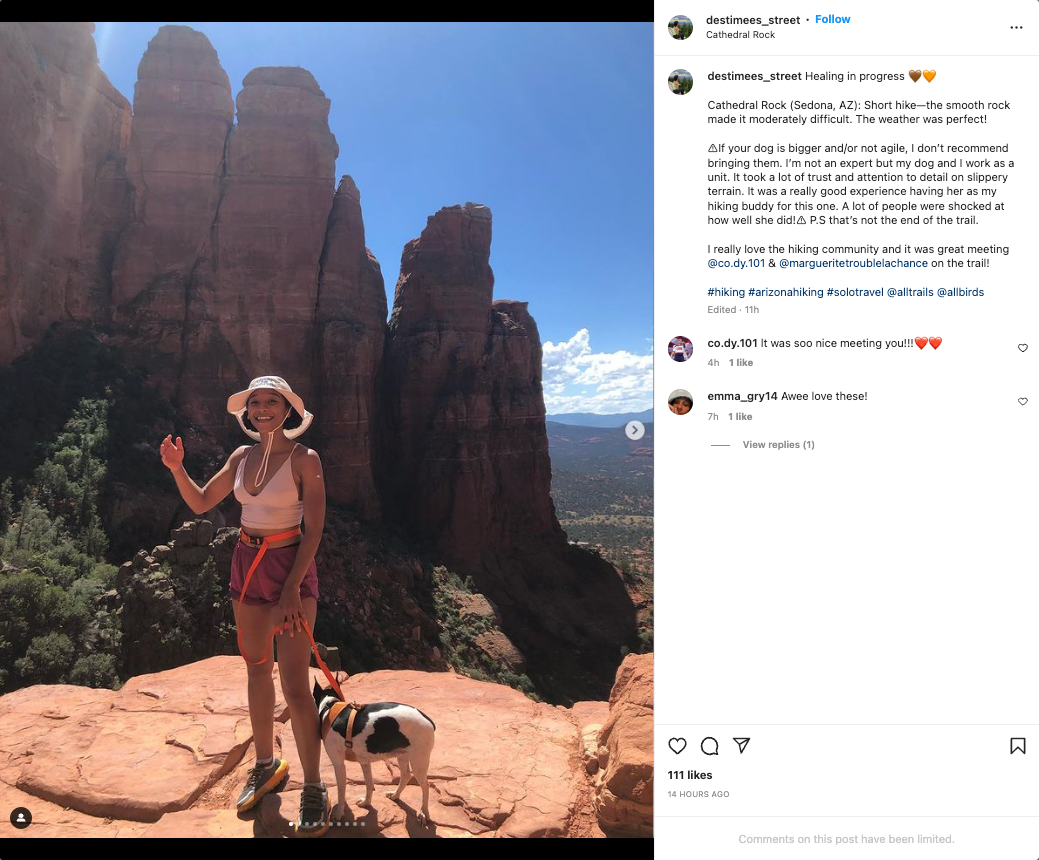
UGC can take many forms. Technically, even product reviews are UGC. One of the most effective types of UGC is pictures of customers actually using your products. Allbirds, a store that sells sustainable shoes and clothing, features lots of pictures of happy customers in its products.
14. Think local
Brick-and-mortar businesses aren’t the only ones that can jump on the local movement. Online retailers can also take a local approach to their ecommerce marketing tactics to increase online sales.
To figure out what local means for you, here are a few ways you can look at it:
- Identify where you have large concentrations of customers and run a promotion for that location. Look at which products those customers are buying and other spending behavior indicators, and consider local events or seasons to appropriately time a promotion.
- If you have a warehouse or multiple warehouses, consider a promotion with free, discounted, or expedited shipping to customers in the vicinity. This’ll be easier for your operations team to execute and also help you promote sales in a cost-effective manner.
- Run a door to door sales strategy and sell products directly at customers homes or workplaces.
15. Optimize your product pages
Conversion rate optimization (CRO) is the practice of optimizing your website for on-site conversions and increased sales. Practicing CRO helps you identify problem areas on your site.
Where are you losing sales? Who’s dropping off and why? What can you do to capture those missed opportunities? This process is done through qualitative and quantitative research, so you get a holistic and unbiased view of your site's conversion-oriented.
Once you’ve researched to identify challenges and opportunities, you can develop hypotheses and tests to see which approaches generate the most sales. For more information on how you can implement CRO to increase online sales, check out the following:
- 19 Growth and CRO Experts on Increasing Revenue Without Increasing Traffic
- How to Find and Plug the Leaks in Your Conversion Funnels
- The Complete Guide to A/B Testing: Expert Tips from Google, HubSpot, and More
16. Optimize for mobile
According to a joint report created by We Are Social and Hootsuite, 60% of ecommerce purchases are made via mobile phones. Optimizing your store for mobile means more than having a responsive design. It means you’re designing your site with mobile visitors in mind from start to finish.
Perhaps you have a bigger Add to Cart button on all mobile product pages, making it easier for the visitor to add to cart without zooming in, for example. You might also present your images in a different format, making it faster for mobile visitors to load product photos and easier to zoom in.
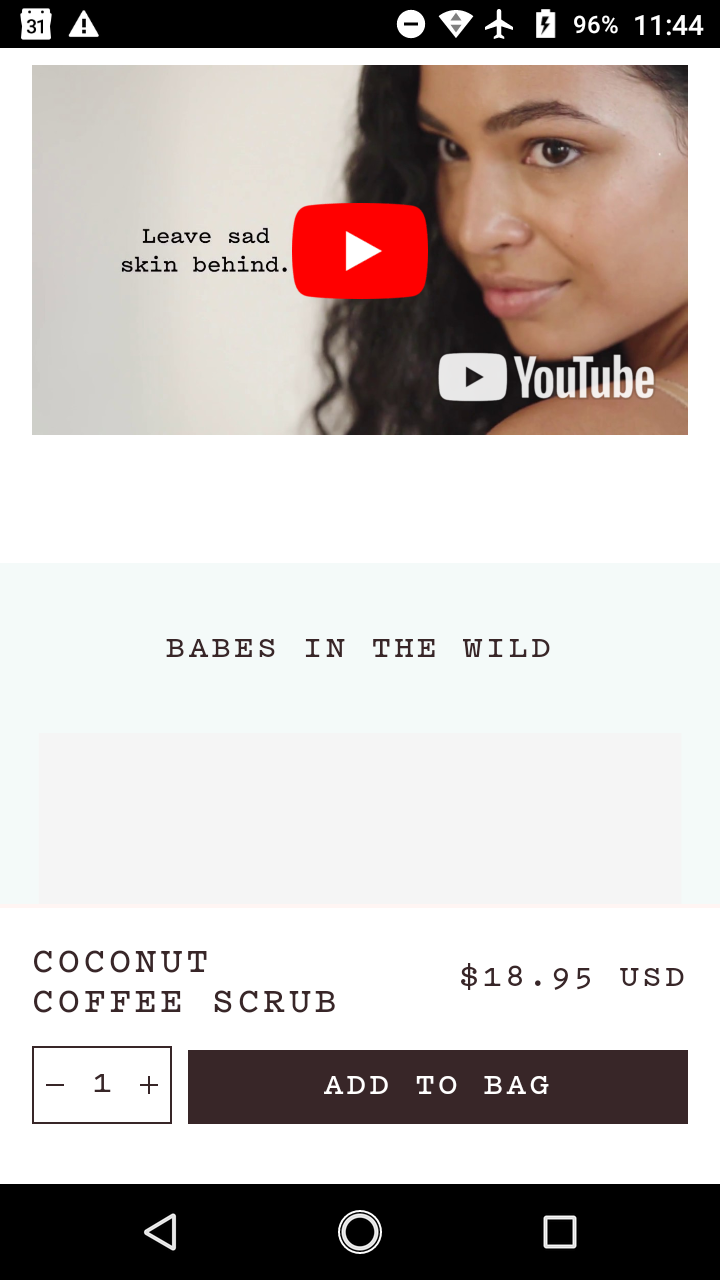
Frank Body sells body scrubs and skin care products. When a mobile visitor lands on a product page and scrolls down, the Add to Cart button appears at the bottom. This saves the visitor from having to scroll back up, likely losing their spot on the page.
Read more about optimizing your store for mobile:
- Mobile Ecommerce Design Trends: 11 Best Practices to Optimize for Mobile-First Sales
- 5 Simple Hacks for an Optimized Mobile Ecommerce Design
17. Reward your loyal customers
Focusing on customer retention is a cost-effective way to increase online sales. Return customers account for 22% of a retailer’s revenue, while making up just 11% of the total customer base, according to Stitch Labs. They also spend 15% more over the course of a year.
One way to reward loyal customers and big spenders is through a customer loyalty program. There are many ways both your customers and you can benefit from a loyalty program. They give customers extra incentive to make a purchase, and they keep your brand top of mind through automated reminders.
You choose how to reward customers, how frequently, and for what actions. For instance, you might have a point-based program with its own point-based currency that can be redeemed for discounts, free shipping, or free gifts.
Outdoor brand REI has a robust customer loyalty program. Members pay a one-time fee ($20) to join the program, and they receive access to exclusive online (and in-store) sales and events. They also receive coupon codes and a portion of what they spend over the course of a year back in store dividends.
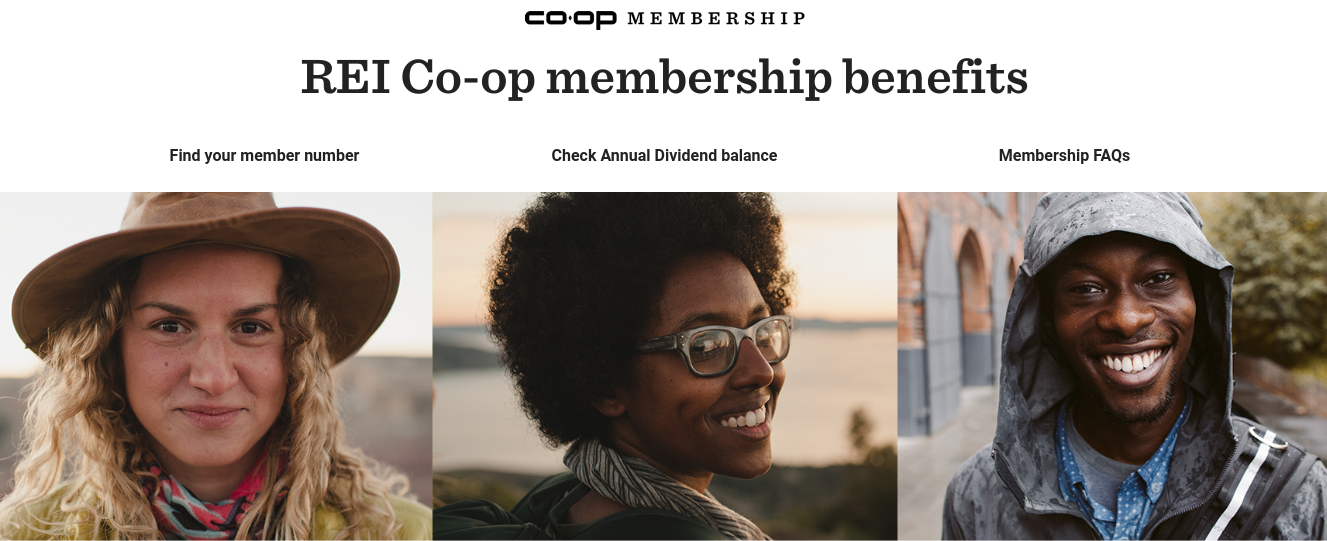
Your loyalty program doesn’t need to be as robust and you can implement it easily with a Shopify app like Smile.
18. Run pay-per-click (PPC) ads
Pay-per-click is an online marketing model where you pay a fee each time someone clicks on one of your ads. You bid on the keywords that are relevant to your business and brand. Then Google and other search engines use an algorithm to decide where your ad will appear when someone searches for those keywords.
This is a great way to get your brand in front of your target market searching for the products you sell and therefore more likely to visit your web page and make a purchase. Google estimates that businesses that use Google Ads get back eight times the amount they spend on advertisements. The most popular form of PPC is search engine advertising.
For example, If you look at Nike, its PPC advertising resulted in the brand showing up as the first result for the word “shoes” on Google.
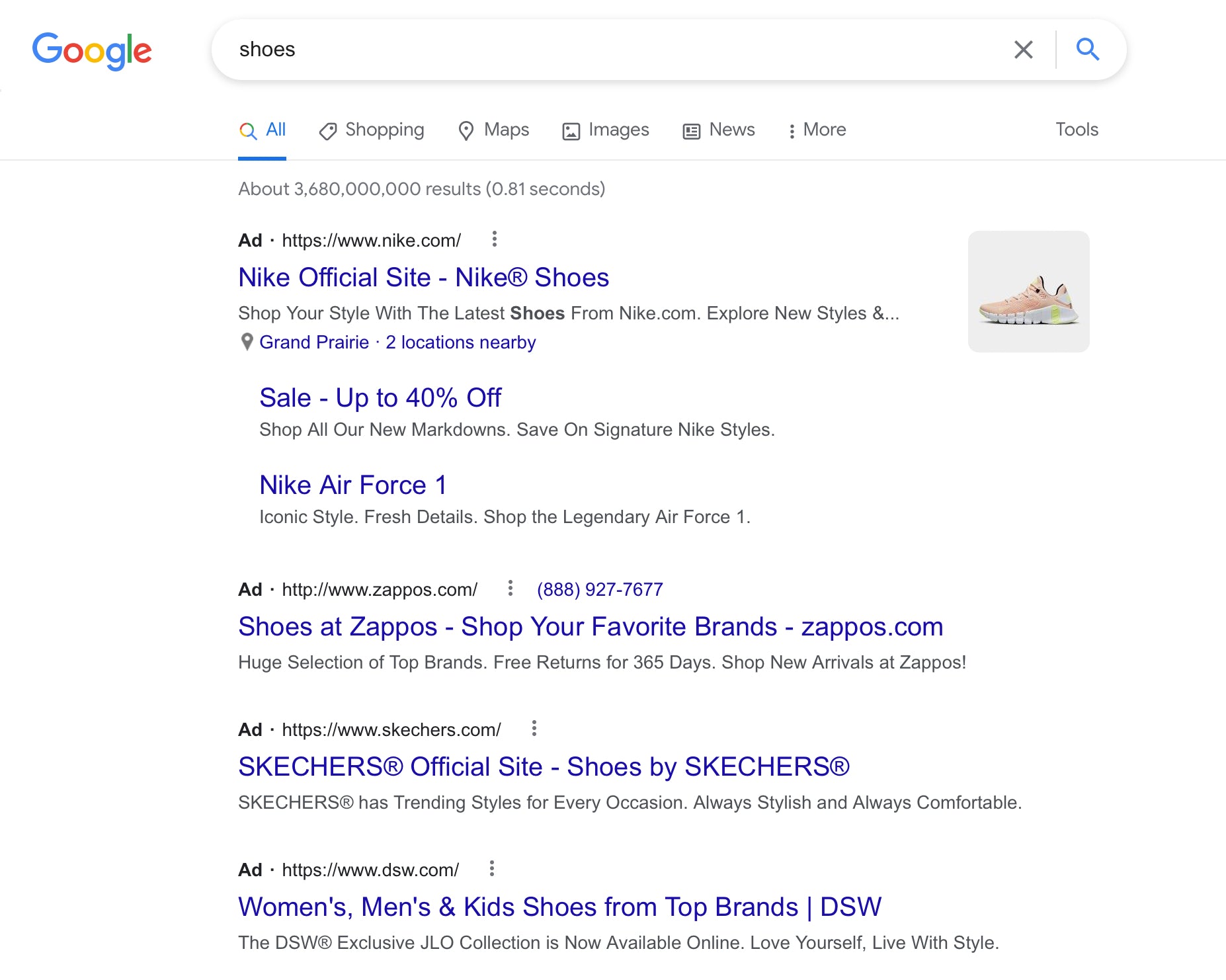
If you’re not set up to handle traffic to your landing page or don’t have a high-quality ad set up, this marketing effort could cost you a lot of money with very little return.
However, when used right, it’s been proven to boost sales significantly, which is why most businesses invest in PPC. In fact, according to Insider Intelligence, search advertising spending will continue to have double-digit growth and reach $111.8 billion in 2023.
19. Sponsor events
Sponsoring an event or non-profit organization can boost the image of your brand through outreach as well as get your business in front of new potential customers. You’ll also get a lot of free social media mentions, which can get you valuable KPI metric data.
There are a few different types of sponsorships you can engage in:
- Financial: This is the most common. You donate money in order to get agreed upon perks or publicity.
- Goods/services: Instead of cash, you offer products or services for the event. For example, donating products for raffles or thank you gifts for non-profit fundraisers.
- Media/promotional: You offer to use your marketing resources to promote the event, with your brand being mentioned or shown in some way. That will get your business in front of the audience for the event.
A good example of this is @jaekicho and his Righteous Eats event that Samsung sponsored in August of 2022.
The event was to support mom and pop restaurants and food startups in NYC by sharing all the different types of food and culture you can find in the Big Apple. Samsung partnered with the Street Vendor Project, bought advertising space on a screen in Times Square, and provided the space for the event.
20. Make influencer partnerships
In 2021, the US spent approximately $3.7 billion on influencer marketing. Globally, influencer marketing is worth over $13 billion. If you have a digital marketing strategy, it’s a good idea to have an influencer marketing campaign.
An influencer partnership is partnering with an influencer with a following of your target audience. You get to decide how you want to set up the partnership and how involved your influencers are in your marketing plans.
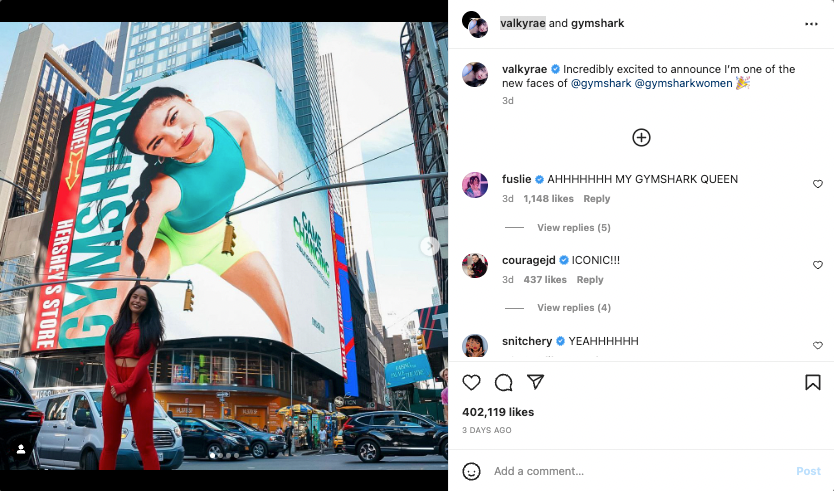
You can simply use them as affiliates and use their following to get your small business more sales leads. Or you can use their online personas and make them central to new marketing initiatives, like Gymshark did with @valkyrae.
21. Start TikTok marketing
TikTok exploded in popularity over the past couple years. In 2021, it increased first-time installs by almost 400% globally with 740 million new users. TikTok became so popular because of its AI recommendation system that prioritizes finding videos you think you will like from users you haven’t already discovered.
Because of this, it’s a social media platform that makes it easy to create your own niche. No matter how specialized your business is, TikTok’s algorithm will still get your content in front of people regardless of how many followers you have.
Just check out the way Duolingo uses its mascot to keep up with current trends and keep its brand in the limelight.
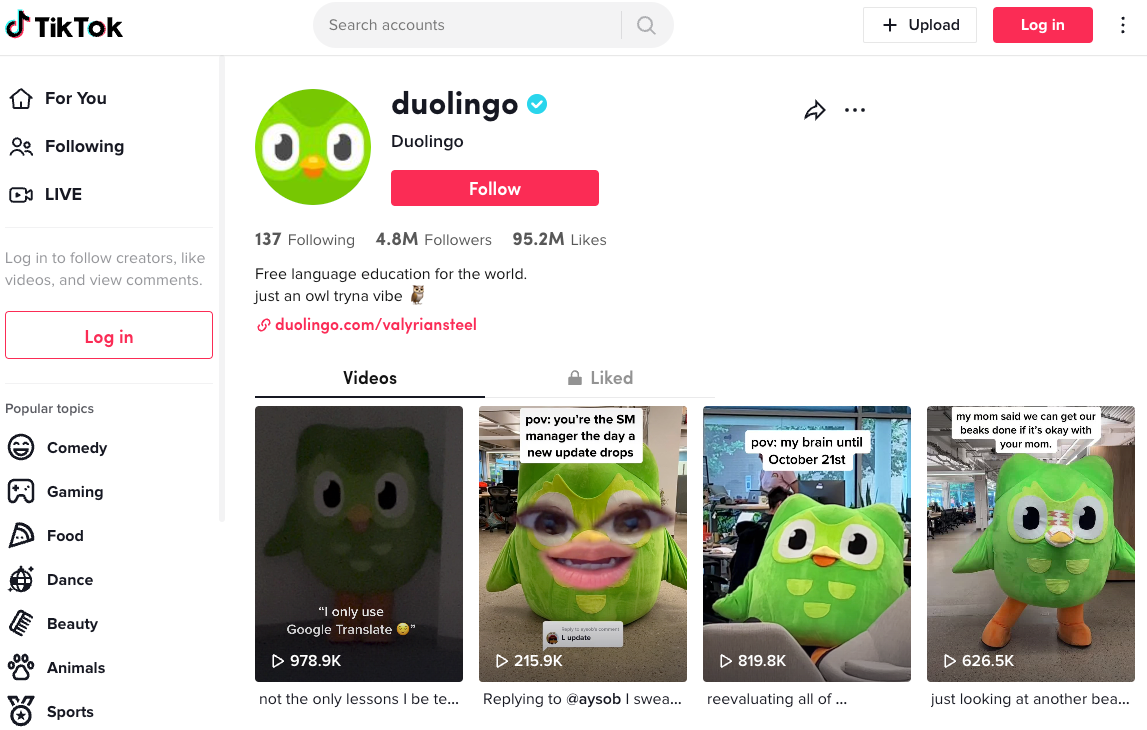
When advertising on TikTok, 62% of the platform's audience is in the 10- to 29-year-old age group. And according to the 2022 GWI Social Report the top three reasons users use TikTok is to find funny/entertaining content, post/share photos or videos, and keep up to date with news/the world.
22. Get customer testimonials
A customer testimonial is when a satisfied customer vouches for your products or services. A good testimonial will attract new customers and cause potential customers to trust your brand and products more.
With ecommerce shopping, most potential customers check reviews on businesses and products. According to a survey done by BrightLocal, 77% of people “always” or “regularly” read reviews and testimonials when browsing for local businesses.
Brands like Lotus Belle use a dedicated page to show off testimonials. They take a unique approach by grouping types of testimonials by buyer concerns (wind durability, quality, size, etc.). They also have sections to show off celebrity praise and corporate feedback.
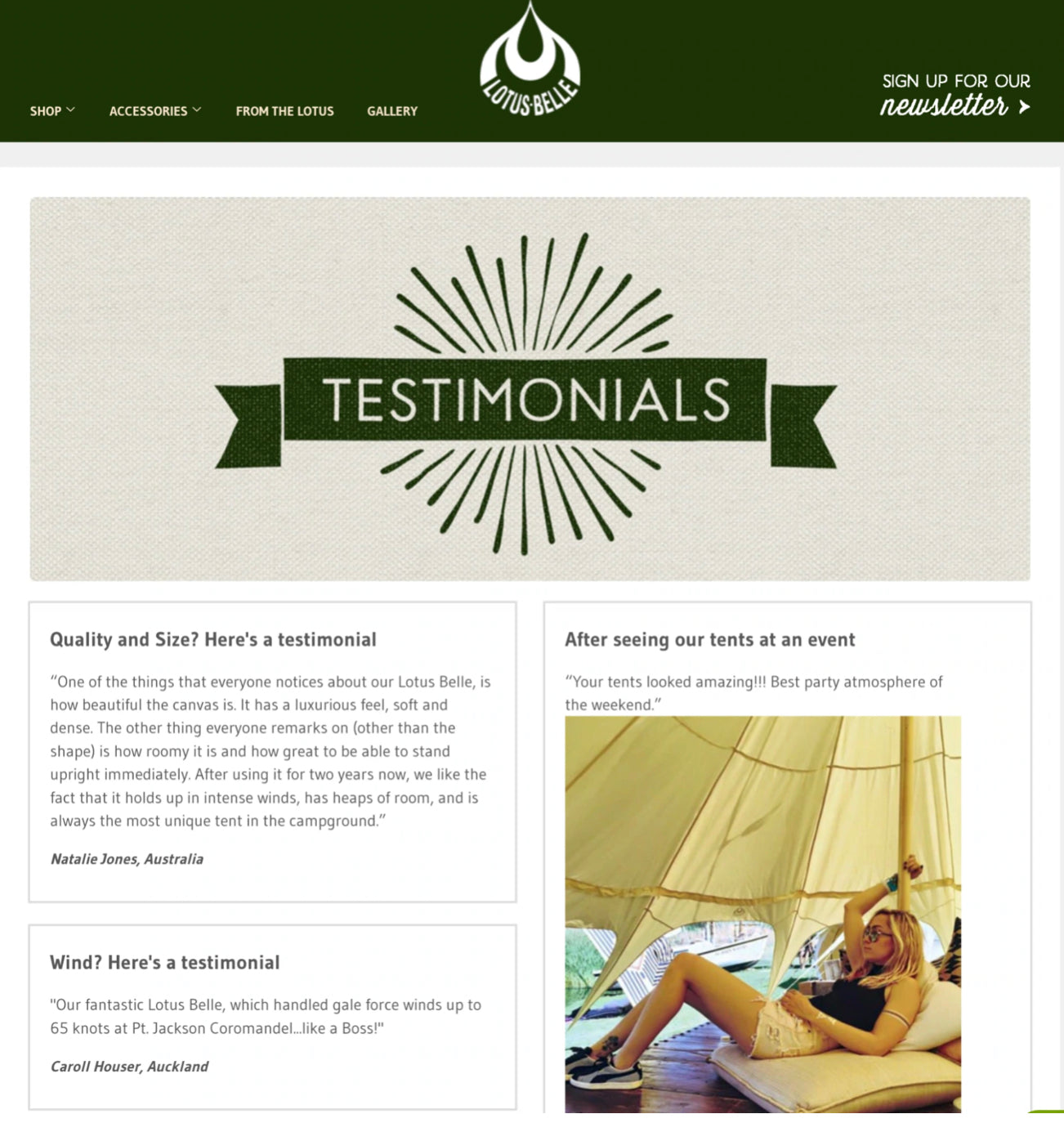
Customer testimonials can come in many different forms. It can be a shout out on social media, a short video of a tour of your restaurant, or even case studies that show the data behind why your product is needed.
23. Go to events
According to a 2022 Hubspot report, events are the third most effective marketing channel for getting new customers.
Event marketing is when you create a themed exhibit, display, or presentation to promote a product, service, cause, or organization. These events can happen both online and offline, and the point is to have customer engagement.
There are several different kinds of events you can create, like:
- A conference or convention, where you can present speakers and opportunities to network for people interested in the industry of your business
- Pop-up shops to reach out to different demographics or geographic areas
- Community events to reach out to your neighbors and get to know the community you’re serving
- Charity events like hosting a 5K or beach clean up
- A themed experience like a pumpkin patch or Valentine’s Day celebration
A good example of an experiential event would be the Audible and Civic Entertainment Group collaboration at the 2022 San Diego Comic-Con.
The two companies had massive, elaborate sand sculptures built on the beach that promoted Impact Winter, The Sandman, and Moriarity: The Devil’s Game. People could take pictures with the sculptures and get samples of Audible originals while lounging on Audible-branded beach chairs.

Read more: How to Set Up & Open a Pop-Up Shop
24. Start livestreaming
Livestreaming is a marketing strategy of broadcasting content on social media to a live audience. According to McKinsey & Company, livestreamed events are seeing conversion rates of almost 30%. Livestream shopping in China is already worth more than $66 billion.
When livestreaming, it’s important to choose the right host for your brand’s livestream. You can use influencers and celebrities who will bring their own following to the event. Or you can use unknowns and company experts that are engaging and knowledgeable. Just make sure that whoever you use, it’s the right fit for the event and for your brand’s image.
Livestream shopping is the most common use for livestreaming. You can also use livestreaming to announce product launches and new partnerships, or to provide tutorials and maintenance tips. To encourage attendance, a good tip is to offer discounts or exclusive offers to those that tune in.
This marketing tactic has been very effective for Winky Lux. CEO Natalie Mackey reports to Glossy, “We see big sales bumps happen across all channels after an IG Live and high engagement.”
25. Run guerilla marketing campaigns
The point of guerilla marketing is to get exposure for your brand and products in a way that is creative and low-cost. It’s usually done offline, so it’s hard to measure the metrics, but if you start seeing your guerilla marketing efforts pop up on social media, you’ve most likely done a pretty good job.
Here are a few different kinds of guerilla marketing:
- Viral or buzz marketing: You use your social network to encourage people to share about your brand through word of mouth.
- Stealth marketing: You advertise in a way that’s not super obvious. An example of this is product placement in movies.
- Ambient marketing: You use unusual locations or objects as advertising spaces. Like on a statue or playground.
- Event ambush marketing: A business ambushes other events to get people’s attention, like a flashmob.
- Street marketing: This is usually posters, fliers, or art displays. Think of all the leaflets that get handed out and posters that seem to magically appear overnight when a new movie is about to be released in theaters.
An example of ambient and stealth marketing is the She-Hulk bench advertisements that popped up right before the She-Hulk series was released on Disney+.

Read more: What Is Guerrilla Marketing? 9 Cool Campaign Ideas to Try in 2022
26. Get press coverage
Press coverage is using press releases to stir up buzz about your business. This is a cost-effective tool that can help startups or small businesses with limited budgets. It allows you to control the story and share what you want people to pay attention to. And using the press will get you in front of a wide audience.
However, don’t go sending out random press releases that don’t tell people anything new or interesting. If you keep using this tactic for a lot of nothing, people will start ignoring your releases. Try to only use press releases for big announcements like:
- Launches of new businesses, products, or services
- Hosting events or contests
- New partnerships with charities, community organizations, or celebrities
- Winning an award
- Big changes to your business like rebranding, mergers/acquisitions, or promoting/hiring new executives
Nike’s press release about its new partnership with top Peloton instructor Jess Sims is a good example of how press coverage can be used effectively.
27. Start SEO marketing
The 2022 Hubspot report states that the second most effective channel for acquiring new customers is still through SEO.
SEO, or search engine optimization, is the process of making your website more visible and easy to find by potential customers. By improving your SEO, you can attract more visitors to your site, which can lead to more sales.
SEO offers a variety of benefits for ecommerce brands, including:
- Improved organic search visibility. By optimizing product pages and utilizing blog content, ecommerce brands can improve their ranking on search engine results pages (SERPs), resulting in more website visitors.
- Higher click-through rates. When a website ranks higher in SERPs, it generally receives more clicks than a lower-ranked site. This can lead to increased traffic and sales for an ecommerce brand.
- Build brand awareness and credibility. When customers see an ecommerce brand consistently ranking high in SERPs, they begin to trust the brand more and are more likely to make a purchase.
Here are a few key tips for optimizing your ecommerce site for SEO:
- Make sure your site is mobile-friendly: In this day and age, it’s essential that your website is responsive and displays correctly on all devices. Not only will this improve the user experience, but it will also help you rank higher in mobile search results.
- Optimize your product pages: Ecommerce sites have unique product pages that need to be optimized for both users and search engines. Make sure your title tags and meta descriptions are clear and concise, and include relevant keywords for each page. In addition, take advantage of product reviews and customer testimonials, as they can also help improve your organic search rankings.
- Start a blog: One of the benefits of having an ecommerce site is that you can create a blog to post keyword-rich content. This content can help improve your organic search visibility and attract new visitors to your site. In addition, make sure to link back to your product pages from your blog posts, as this will also help with conversion rates.
- Implement schema markup: Schema markup is code that helps search engines understand the structure of your website and provide additional information about your products and services. By implementing schema markup on your ecommerce site, you can make it easier for potential customers to find the information they need, which can ultimately lead to more sales.
- Promote social media sharing: Social media can be a great way to drive traffic to your ecommerce site, so make sure you promote sharing on platforms like Facebook, Twitter, and Pinterest. In addition, try adding social media buttons to product pages and blog posts, as this will make it easy for visitors to share your content with their followers.
Read more:
- The Ultimate Beginner’s Guide to Ecommerce SEO
- How to Get Your Online Store to Rank on Page One (With Checklists)
- 30 Free SEO Tools for Driving Traffic to Your Website
28. Repurpose content
Content creation is an ever present demand now with social media, so if you already have content, why not repurpose it so you can take advantage of it twice? Doing this lessens the burden of constantly creating content, and it also helps extend the reach of your content.
A good example of this is turning a blog post into a podcast. This will appeal to those consumers who would rather listen to something while driving than be bent over their phone.
Some more ideas are:
- Turn internal studies/data into case studies
- Turn blog content into video content
- Use testimonials for social media content
- Update/refresh old blogs posts with new information
- Use blog content as part of online curriculum/courses
- Get a new perspective on topics you’ve already covered with guest contributors
29. Sell on marketplaces
Marketplaces are ecommerce resources that can help your brand and products reach more people. Marketplaces like Amazon have an enormous reach, with over 200 million Amazon Prime members in the US alone. And places like Etsy allow you to market directly to your niche.
However, using a marketplace to sell your products has its pros and cons.
Pros:
- You gain access and the trust of the marketplace’s customers
- You can develop new opportunities for global sales
- You have the ability to check out your competition and adjust pricing accordingly
- It can give you access to new suppliers and partnerships
- It can be an additional commerce channel extending your reach
Cons:
- A need for consistency in look for certain marketplaces (like Amazon) may prevent your brand from being recognized
- Marketplace fees
- Rules and regulations of marketplace may not align with your business
When choosing the right marketplace for your brand, research to see what demographic tends to frequent what marketplace.
30. Run webinars
A webinar is an online seminar or presentation that is typically used to provide information or training to a group of people. Webinars can be live or recorded, and are usually conducted over the internet using video conferencing software.
Webinars have become increasingly popular in recent years as a way for businesses and organizations to reach a larger audience with their message. They offer a convenient and cost-effective way to deliver content, and can be used to train employees, generate leads, or educate customers on a variety of topics.
When done right, webinars can be highly engaging and informative. But there’s more to running a successful webinar than just setting up a camera and hitting Record.
Here are a few things to keep in mind when planning your next webinar:
- Purpose: First, you need to determine the purpose of your webinar. What do you want to achieve? Are you looking to generate leads? Train employees? Educate customers? The purpose of your webinar will dictate the content, format, and length of your presentation.
- Audience: Who will you be targeting with your webinar? Knowing your target audience is essential for creating content that resonates with them. What are their needs and wants? What challenges do they face? Answering these questions will help you create targeted content that speaks directly to your audience.
- Format: There are several different formats you can use for your webinar. The most important thing is to choose a format that best suits the topic and purpose of your presentation. For example, if you’re doing a product demonstration, it might make sense to use a screen-sharing format so participants can see exactly what you’re doing. If you’re giving a presentation on a sensitive topic, on the other hand, you might want to use a panel format so multiple voices can be heard.
- Content: Once you know your webinar’s purpose and target audience, it’s time to start creating content. This is where most people struggle—coming up with fresh ideas that will hold their audience’s attention for an hour (or more). If you’re stuck, try thinking outside the traditional “presentation” format and get creative with your content delivery. For example, you could host a virtual panel discussion, interactive Q&A session, or even something as simple as an ask me anything–style chat.
Webinars offer businesses and organizations a great way to reach a larger audience with their message. By following these tips, you can ensure your next webinar successfully achieves its objectives.
31. Get referrals
A referral is a system whereby customers are given an incentive to promote a brand or product to their friends and family. In most cases, the customer is given a discount or some other benefit for each person they refer who makes a purchase.
Referral programs can effectively generate new customers and grow sales, as they tap into the power of word-of-mouth marketing. When done right, referral programs can create a virtuous circle of growth for your business.
There are a few things to keep in mind when setting up a referral program:
- Make sure there is an incentive that is valuable enough to motivate customers to take part.
- Keep the program simple and easy to understand.
- Make sure it is easy for customers to share their referral link with others.
- Track referrals and payouts so you can monitor the success of the program.
With an app like Referral Candy, you can create an effective referral program that rewards existing customers, get new ones, and make more sales.
32. Promote Instagram giveaways
An Instagram giveaway is a promotion run by a brand or individual on Instagram. In a typical giveaway, the host will ask followers to perform certain actions to enter, such as liking a photo, following the account, and tagging friends in the comments. A prize is then awarded to a randomly selected winner (or winners) from all of the eligible entries.
While giveaways are often used as a marketing tool to grow an Instagram following, they can also be used to generate leads, boost engagement, or even just to show appreciation for existing followers. Many brands run regular giveaways as part of their social media strategy.
There are a few key things to remember when running an Instagram giveaway.
- Ensure the prize is something your target audience would be interested in.
- Create clear and concise rules for the giveaway, making sure to specify how many winners will be chosen and how the winner will be selected.
- Promote the giveaway as much as possible to ensure maximum reach.
When choosing a prize, it could be a product from your ecommerce store or a gift card to a popular retailer. If you’re unsure what would make a good prize, consider surveying your followers to get an idea of what they would be most interested in.
Once you’ve decided on a prize, it’s time to create the rules for the giveaway. To avoid confusion, it's always best to err on the side of providing too much information rather than too little. Additionally, consider using an online tool like Rafflecopter to manage entries and randomly select a winner.
Finally, once the rules are created and the prize is finalized, it’s time to promote the giveaway as much as possible. This can be done by sharing it on your brand’s other social media accounts, sending out an email blast to your subscribers, or even running ads on Instagram. The more people who see the giveaway, the more likely you are to get quality entries.
With careful planning and execution, an Instagram giveaway can be a great way to engage with your audience and achieve your desired results.
Learn more: How to Run an Instagram Giveaway: Ideas and Tips
Move forward with your own online store
The most important thing to remember about marketing tactics is that they should always support the overall strategy. Tactics that are not aligned with the company’s goals will not help it achieve its objectives. By trying some of the marketing tactics above, you can improve lead generation in your business and hit your goals every quarter.
Read more
- Ecommerce Laws- Legal Requirements for Ecommerce Websites
- How To Start Affiliate Marketing With No Money
- Ecommerce Funnel- Learn the Stages of the Ecommerce Conversion Funnel
- Email Marketing Metrics- How to Measure the Health of Your Campaigns
- Affiliate Marketing for Beginners: Your Startup Guide (2024)
- How to Develop an Ecommerce Strategy
- Shopify’s Entrepreneur-in-Residence- 'No, Influencer Marketing Isn’t Overhyped'
- Follow The Post-Purchase Path For Long Term Growth
- What Is Internet Marketing? Definitions and Examples
- What is Google Shopping and How Does it Work?
Marketing tactics FAQ
What are the 4 Ps of marketing?
What are the 7 Ps of marketing mix?
What are the types of marketing tactics?
Some common marketing tactics include advertising, public relations, promotions, and events. Each of these tactics can be further divided into subcategories.
For instance, advertising can include paid ads, sponsorships, and product placement; public relations can include press releases and media relations; promotions can include coupons and sweepstakes; and events can include trade shows and conferences.


